
- A full roof replacement in the Lake City and surrounding North Central Florida areas runs anywhere from $9,000 to $25,000+. That’s a significant investment for any homeowner.
- But here’s the good news: with the right roof maintenance practices and proactive care, you can extend the lifespan of your roof and delay replacement for years.
- This guide outlines what actually contributes to roof deterioration, which maintenance practices make a measurable difference, and how roof rejuvenation can extend shingle life by 5 to 15 years.

Why Roofs Fail Early in North Central Florida
Florida is particularly harsh on asphalt shingles. Intense UV exposure, frequent afternoon thunderstorms from May through October, high humidity year-round, and hurricane season all create a demanding environment.
Here’s what happens to your shingles over time.Asphalt shingles contain petroleum-based oils that maintain flexibility. Over time, UV radiation and heat cause these oils to dissipate. Shingles gradually lose embedded oils, becoming brittle and shedding protective granules.
As that process accelerates, cracks form, shingles curl at the edges, and water begins to penetrate underneath.
The most common contributing factors we see in the Lake City and surrounding North Central Florida areas include:
- UV degradation from 230+ sunny days per year
- Thermal cycling from 95°F afternoons dropping to 70°F nights
- Wind damage during summer storms and hurricane season
- Moisture trapped under shingles due to persistent humidity
- Algae and moss growth feeding on limestone filler
Modern asphalt shingles also contain reduced petroleum content compared to earlier formulations. As a result, they tend to lose flexibility more quickly over time.
7 Roof Maintenance Practices That Make a Real Difference
1. Schedule Biannual Roof Inspections
Professional inspections should be completed in the spring (pre-storm season) and late fall. A trained inspector can identify early-stage issues such as flashing separation, nail uplift, punctures, and granule loss.
Between inspections, perform visual ground-level checks for missing shingles, irregular roof lines, or dark streaking. Granule accumulation in gutters—resembling coarse black sand—is often an early indicator of surface wear.
2. Maintain Clean Gutters
Gutter blockages can force water beneath shingles and contribute to deck deterioration. In North Central Florida, organic debris such as leaves, pine needles, and Spanish moss accumulates quickly following storms.
Gutters should be cleaned at least twice annually to maintain proper drainage performance. Downspouts should discharge water a minimum of five feet from the foundation. Properties with heavy tree coverage may require more frequent maintenance.
3. Manage Overhanging Vegetation
Tree limbs extending over a roofline introduce multiple risks, including debris accumulation, abrasion during wind events, and wildlife access. Branches should be maintained at least 6 to 10 feet from the roof surface.
4. Address Damage Promptly
Even minor shingle loss can create vulnerability during the next storm event. In our humid, storm-prone climates, delayed repairs often result in moisture intrusion and accelerated decking deterioration.
5. Ensure Proper Attic Ventilation
Inadequate ventilation is a major contributor to premature roof aging. Heat and moisture buildup from below accelerates material degradation while external UV exposure compounds the effect.
A properly balanced system includes soffit intake vents and ridge exhaust ventilation. Common warning signs include excessive attic heat, mildew on roof decking, or persistent musty odors.
6. Address Algae and Moss Growth Early
Dark streaking on asphalt shingles is not purely cosmetic. It is typically caused by Gloeocapsa magma, an algae species that feeds on limestone filler. Moss growth is more aggressive and can physically lift shingle edges, allowing water intrusion.
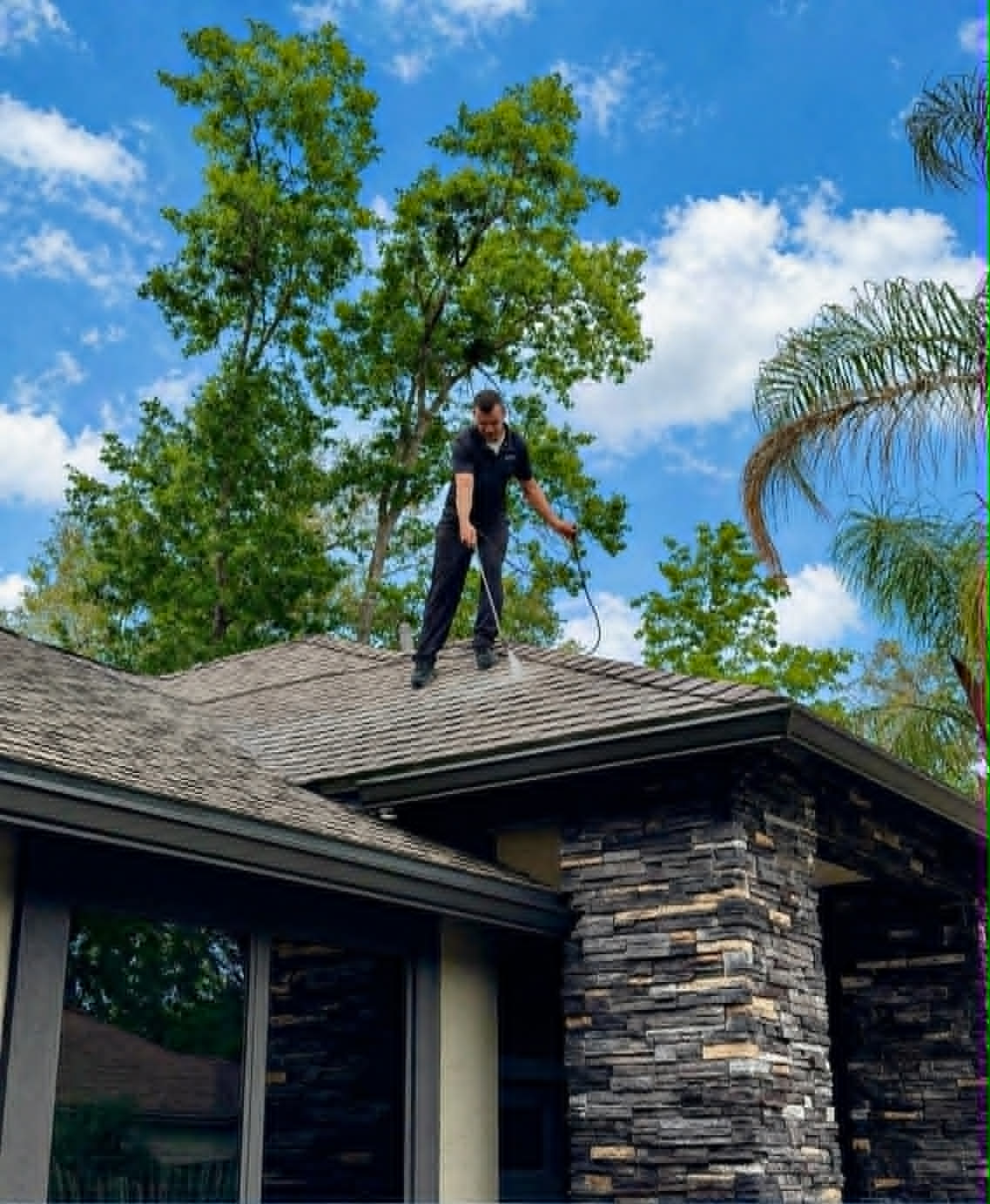
Cleaning should be performed with manufacturer-approved solutions only. Pressure washing is not recommended for asphalt shingles. Zinc or copper ridge strips may help inhibit regrowth over time.
7. Evaluate Underlayment Condition
Underlayment is the secondary waterproofing layer beneath shingles.
In Florida climates, synthetic underlayment is generally preferred due to improved resistance to heat and moisture compared to traditional felt paper, as it performs better in these conditions.
During inspections the underlayment should be evaluated. When inspecting, look for signs of sagging, soft spots, or leaks. Check for mold, dark stains, or discoloration on walls and ceilings, as these may indicate moisture intrusion. Examine shingles for peeling, damage, and proper installation, ensuring they have correct overlaps and secure fastening.
How Roof Rejuvenation Extends Roof Life
While routine maintenance preserves roof condition, it cannot restore oils lost over time and this is where roof rejuvenation comes in.
Roof rejuvenation is a targeted treatment designed to penetrate the shingle matrix at a molecular level.
GoNano’s nanosilica technology uses particles measuring 40–60 nanometers in size that penetrate the asphalt layer, filling microscopic voids and restoring flexibility. To provide scale, these particles are thousands of times smaller than a human hair, allowing them to distribute evenly throughout the shingle structure rather than remaining on the surface.
Once absorbed, the nanosilica interacts within the asphalt layer, filling microscopic pores in the shingle, to support material flexibility and help reinforce the shingle from within. This process helps slow the natural aging effects caused by UV exposure, heat, and environmental weathering.
Unlike surface coatings, which sit atop the shingle, this process integrates within the material itself. The Asphalt Roofing Manufacturers Association (ARMA) does not recommend surface coatings for asphalt shingles and actually advises against applying coatings to asphalt shingles.
GoNano’s treatments modify the internal structure of the shingle rather than creating a surface barrier.
What roof rejuvenation delivers:
Improves weather resistance: UV rays → slows aging & discoloration; Water/moisture → hydrophobic barrier(repels water); Hail impact → can upgrade impact resistance class; Wind → reduces tear-offs; Freeze-thaw cycles → improves durability → Reduction in granule loss
5 to 15 additional years of roof life, depending on condition
Improved impact resistance (Class 1 to Class 3; Class 4 with repeat application)
Application typically completed within a single day with approximately two hours of active treatment time
Does not void manufacturer warranties
Which Treatment Fits Your Roof’s Age?
- Not every roof gets the same treatment. The right approach depends on how old your shingles are and what condition they’re in:
- NuRoof Fortify (also referred to as Shingle Saver) (roofs 0-5 years old): Treats newer shingles before significant oil loss begins. Adds 15 years of life.
- NuRoof Revive (roofs 6-20 years old): Restores flexibility to mid-age shingles that are starting to show wear. Adds 10 years of life.
- Bio-Boost (roofs 10+ years old): Gives aging shingles a final push before replacement becomes necessary. Adds 5 years of life.
The earlier you treat, the more years you gain. Earlier applications generally produce stronger long-term results. A treatment on a 5-year-old roof will deliver far better results than the same treatment on a 20-year-old roof. But even on older roofs, it usually makes financial sense. Roof rejuvenation costs a fraction of full replacement.
When Replacement Is the Appropriate Option
Roof rejuvenation is not suitable for all conditions.
Replacement should be considered when:
More than 25% of shingles are severely damaged or missing
Structural decking damage or widespread rot is present
Light penetration is visible through roof boards from the attic
Multiple patch repairs have failed to resolve ongoing issues
The roof exceeds 25 years and shows widespread deterioration
A free inspection from our team will provide an honest assessment to determine whether continued maintenance and rejuvenation is viable or if replacement is the more appropriate long-term solution.
A Proactive Maintenance Plan Extends Roof Life
Long-lasting roofs are not the result of chance. They are maintained through consistent inspections, timely repairs, and preventive treatment.
If your asphalt shingle roof is showing early signs of aging—or if you want to protect a newer system from Florida’s climate conditions—our professional evaluation can help determine the most effective path forward. Learn more about our roof rejuvenation services.


